
Browse 570 saxophonists in Bulgaria, rated 5 out of 5 from 2,091 reviews from real clients. Solo sax players, jazz duos and larger ensembles are available for weddings, parties and corporate events, with most bookings coming in around €420 and shorter ceremony sets costing less.
Availability moves fastest at the top of the calendar: peak-season Saturdays and the December party run get taken first, and a saxophonist covering both a ceremony and an evening set will usually hold the whole date rather than half of it. For a date that is already close, it is worth enquiring with more than one act at a time.
Of the 570 suppliers listed here, 5 are based in Bulgaria. The other 565 are willing to travel there.
Based outside Bulgaria, nearest first
No reviews yet Replies in ~2 hrs
Book from €250 (EUR)
Add to favouritesTell us about your event and we'll suggest suppliers, or talk to our team.
Choose a town or city to see suppliers who work there.
 Acoustic Bands in Bulgaria
 Bagpipers in Bulgaria
 Cellists in Bulgaria
 Cover Bands in Bulgaria
 Guitarists in Bulgaria
 Harpists in Bulgaria
 Jazz Bands in Bulgaria
 Pianists in Bulgaria
 Sax & DJ / Live Musician & DJ in Bulgaria
 Singing Guitarists in Bulgaria
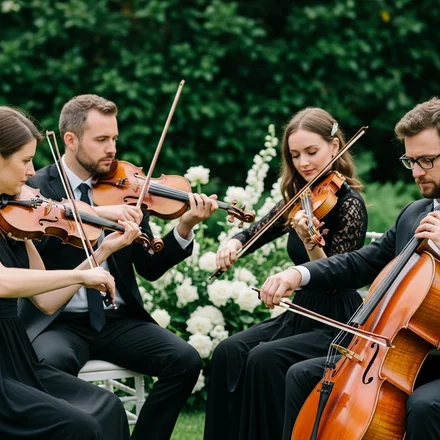 String Quartets in Bulgaria
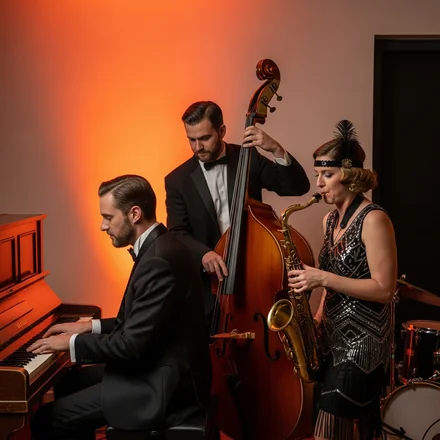 Vintage Themed Bands in Bulgaria
 Violinists / Fiddlers in Bulgaria
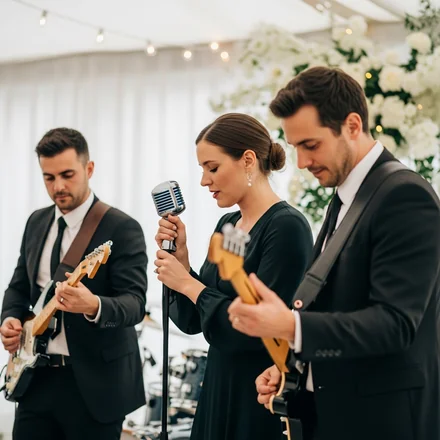 Wedding Bands in Bulgaria
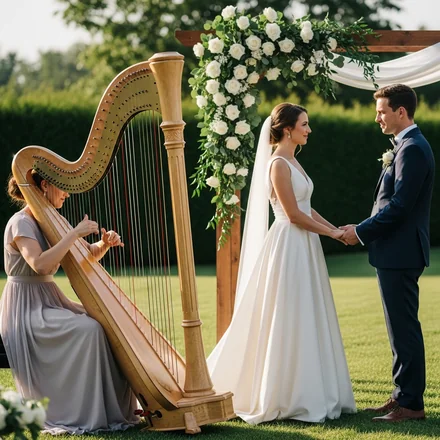 Wedding Ceremony Musicians in Bulgaria
 Wedding DJs in Bulgaria
 Wedding Musicians in Bulgaria
 Wedding Singers in Bulgaria
A saxophone is one of the easiest live acts to fit into a venue. One musician needs little more than a couple of square metres and a power socket, which makes a sax player workable in rooms that could never take a full band, and in venues with tight load-in access or no stage at all.
Ask the venue two things before confirming: where the nearest socket is, and whether there is a sound limiter. A sax player who brings their own PA still has to plug it in somewhere, and a limiter set low will cut a saxophone before it cuts recorded music, because the instrument is loud at close range and peaks sharply. Outdoors, heat and cold both pull the instrument out of tune, and direct sun on a metal body is genuinely uncomfortable to play, so shade and a dry surface matter more than a stage does. Drinks receptions on a lawn or terrace work well as long as the act has somewhere to stand that will not sink or soak.
Most saxophonists work from a backing track library rather than sheet music, so a request has to exist as a track before it can be played. Three to four weeks is a reasonable lead time for something learned specially, and a first dance or processional is worth confirming earlier still. Send a running order rather than a start time: an act that knows when speeches finish and when the dance floor opens will place its sets around them, instead of playing through the moments people are meant to be listening to.
Rates for saxophonists in Bulgaria run from €150 to €1,100+, with typical bookings around €420. Check what the figure covers before comparing quotes: PA and setup are usually included, travel may or may not be, and an overtime rate for running past the agreed finish is worth agreeing in writing rather than on the night. Most acts take a deposit to hold the date, with the balance due close to the event, and short notice tends to cost more rather than less, since a free Saturday in peak season is a date someone else has already turned down.
The average price is €420 (EUR), with most priced from €150 to €1,100+. Contact the supplier you like for an accurate quote.
Based on 8,044 enquiries for Saxophone Players at events in every location, made through this site in the last two years. Updated 5 November 2026.
 Live saxophone & flute player
"What an amazing and talented sax player!! He can play all types of music, any type of style and does it with talent and finesse. Brings joy to the whole company and entertains everyone at the party. Easy-going, prestigious and professional sax player. Once you hear him play, you can’t get enough!"
 Bel Greco
"Interview with Christiana Theofanous for Kalithea Press, in cooperation with Kalithea Radio and Galaxias FM 92.1 Fokida
1. Mr Yannis Apostolidis, for many years you lived and worked professionally in England. What led you to choose life abroad, and how did this long journey shape your life and your artistic path?
My decision to leave for England in 1995 came from my need to develop musically and to discover new horizons. I had already gained significant experience in Greece. From September 1989, when I settled in the country, I began working as a bassist in music venues, while at the same time searching for different ways to express myself artistically.
In 1994 and 1995 I took part as lead singer in a musical theatre production at Mylos Club in Thessaloniki. In 1994, I also recorded an album with English lyrics, with a rock band, at the Papazoglou studio.
When my work with Mylos Club ended, I felt that I had to take the next step. I wanted to test my abilities in a different environment, to come into contact with other musical cultures and to broaden my possibilities.
So, in 1995, I left for London, where I lived until 2002. Those years were a decisive chapter of my life. I worked as a singer, played saxophone and flute, and got to know a multicultural musical environment at first hand.
My path was not always easy, but it taught me to persevere, to adapt and not to rest on my laurels. I believe that an artist must remain in constant search. Music is not a road you learn once and then it is finished; it is a continuous process of discovery.
2. We know that you also passed through the world of street music, where you managed to create a complete musical sound, essentially building a whole music band by yourself, with the help of the right equipment. At the same time, you perform songs in many languages. How did this experience begin, and what did direct contact with the public teach you?
Street music was a wish I had had for many years. When I lived in London, I was not given the opportunity to try it, since from the very first moment I worked as a singer in bars and restaurants. At the same time, I played saxophone and flute and took part in jam sessions in the pubs of my neighbourhood, where I had the chance to develop through live music and collaboration with other musicians.
In the end, I fulfilled this wish two summers ago, here in Chalkidiki. It was a special experience for me, because I managed to try something I had been thinking about for years.
With the help of the right equipment, I can create a complete musical sound, giving the impression of a whole band while I am alone. This requires technical knowledge, preparation and constant concentration.
Street music, however, has another dimension. You come into direct contact with people who may not know you at all. There is not necessarily the presentation of an organised stage or the expectation of a particular show. People stop, listen and react spontaneously.
What interests me most is communication. By performing songs in different languages, I can reach people with different cultural references. Music has this magical quality: even when we do not understand all the words, we can feel the emotion.
3. England is a country with a multicultural environment and diverse musical influences. What was your experience there as a Greek singer? What difficulties did you encounter, and what opportunities were given to you to develop artistically?
London was a great school for me. From the very first moment I worked as a singer in bars and restaurants, while at the same time playing saxophone and flute. I often took part in jam sessions in the pubs of my neighbourhood, where I came into contact with musicians of different influences and developed both my vocal abilities and my skills as an instrumentalist.
My everyday life, however, had a difficult side. In the mornings I worked part-time in a sandwich shop in the City of London. I washed food containers and prepared sandwiches, while in the evenings the stage awaited me. It was a reality that demanded hard work and discipline.
In 1998 I started postgraduate studies in music teaching at Middlesex University. Unfortunately, I did not manage to complete them, as my professional commitments forced me to work in the evenings. It is something I still think about with regret, but at the time I had to meet the needs of my life and my work.
That same year I took part as a flautist on the album Kingsize by Boo Radleys, playing flute on two songs. My name, Yannis Apostolidis, is printed on the album cover. It was an important experience for me, and I wished for this collaboration to continue.
England taught me that talent is important, but that it is not enough on its own. It requires perseverance, consistency, professionalism and the willingness to make the most of every opportunity. Above all, I learned not to give up on music, even when the circumstances of life demand great personal sacrifices.
4. During your time abroad, you also found yourself in Saint Petersburg, where you performed concerts and professional collaborations. Would you like to share with us a little of the atmosphere of those performances? How did the audience welcome you, and what do you keep from this experience that stands out?
Saint Petersburg is an important chapter of my musical journey. From 2007 to 2010 I travelled there during the winter season together with my friend and collaborator, the keyboardist Giorgos Apazidis, performing concerts and professional collaborations.
It was a different experience from that of England, as we came into contact with another cultural environment and with people who had different musical references. For a musician, such experiences are valuable, because they make you remain open, observe and adapt.
What I keep from that period is the value of collaboration and of live musical communication. When you go on stage, it is not enough to perform a song correctly. You need to create a connection with the audience and convey the emotion of the interpretation.
Music gave me the opportunity to work in different countries and to meet people I might never otherwise have met. This ability to communicate beyond borders is one of the things I value most in my artistic path.
5. When a Greek artist performs far from their homeland, music often takes on a special emotional character. Did you notice this at your concerts abroad? How does the audience's relationship with Greek song express itself, especially when they are far from Greece?
I believe that Greek song carries a special emotional weight. For Greeks who live far from their homeland, a familiar melody can awaken memories, recall family moments and bring them mentally closer to their place.
Music works like a bridge between the present and our memories. It can remind us of people, places and moments that have left their mark on our lives.
At the same time, I believe that the power of song is not limited by language. A person who does not speak Greek can be moved by an interpretation, feel the melody and grasp the emotion conveyed by the singer.
As a musician, this is something that interests me particularly. I want to be able to communicate with different people and use my voice to convey emotions that are common to all of us.
Greek song has a rich tradition, intense melodic quality and a particular expressive power. I believe it deserves to travel even further, while preserving its authenticity and its identity.
6. Apart from live performances, your artistic path includes collaborations, professional contacts and many different activities. Which do you consider the most important moments of your journey in England and Saint Petersburg? Were there people or collaborations that substantially influenced your path?
If I had to single out certain milestones, I would first mention my experience in London, where I had the opportunity to develop as a singer and instrumentalist through daily work and my participation in musical gatherings.
The album Kingsize by Boo Radleys holds a special place, where I played flute on two songs in 1998. The fact that my name, Yannis Apostolidis, is printed on the cover is a specific and important memory from that period.
Another milestone was 2002, shortly before I returned to Greece, when I created my personal album Vacant Alleyways. It includes six of my own songs, produced by me. I had the feeling that a major cycle of my life was closing, and I wanted to leave behind a work that expressed me personally.
After my return, I worked for about ten years with my friend and keyboardist Giorgos Apazidis, with whom we worked in hotels in Chalkidiki. The pace was demanding, as we worked seven days a week. At the same time, we travelled together to Saint Petersburg during the winters of the 2007–2010 period.
Every collaboration has its own value. When you share the stage with other musicians, you learn to listen, to collaborate and to respect each person's different approach. These experiences are just as important as personal achievements, because they shape you both as an artist and as a person.
7. After so many years abroad, do you believe that the way an artist perceives music, the audience and themselves changes? What did this long experience teach you?
Undoubtedly, life in different countries affects the way you see music and the world. When you come into contact with different cultures, sounds and people, you understand that there are many paths to express yourself artistically.
My own path included different roles. I started as a bassist, took up singing, played saxophone and flute, took part in groups and collaborations, and created my own songs. Each experience offered me something different.
I also learned that music requires continuous work. Knowledge or talent alone is not enough. You need to remain active, try new ideas and accept that there is always something more to learn.
As a person, life abroad made me rely more on my own strengths and face difficulties with greater composure. At the same time, it helped me understand how important the balance is between professional ambitions and our personal responsibilities.
Today, as a music teacher at the Child Creative Occupation Centre in Nea Moudania, I see music from a different side: as a means of education, creativity and personal development.
I believe that an artist truly evolves when they do not stop learning, but also when they find ways to pass on what they have gained through their path.
8. Life far from the homeland has its beautiful moments, but also difficulties that are not always visible to others. How did you experience this distance? Were there moments when you missed Greece particularly, or when you felt that music helped you keep your connection with it alive?
Life abroad has many sides. On the one hand, it gives you the opportunity to meet new people, to work in different environments and to discover possibilities that"
 MiSax
"I booked MiSax to play a surprise act at my brother's wedding and it was a fantastic decision. He played each speaker in with a song of their choice, which was such a personal touch. Guests were thrilled by the surprise and loved it from the first note. MiSax was professional, relaxed, and adapted effortlessly to every last minute change we threw at him. His playing brought so much energy and joy to the evening. I highly recommend MiSax to anyone looking to make their event extra special!"
 Drew Stansall ex The Specials
"We honestly cannot recommend Drew enough! He played the saxophone at our wedding and was absolutely incredible. One of the highlights was him playing our entrance song as we walked into dinner – it made the moment so special and unforgettable! We had so many compliments from our guests about how amazing he was.
Not only is Drew incredibly talented, but he is also so friendly, approachable and great to communicate with from start to finish. He really helped make our day even more special, and we couldn’t have asked for anyone better.
If you’re thinking of booking a saxophonist for your event, do not hesitate – Drew is fantastic! Thank you so much for being part of our special day!"
 PJ Solo Sax n Vocals
"Hey Paul ! Thank you for everything !
We had so many wonderful compliments about how amazing you were and how it set the tone ! Thank you for making the trip over."
 Saxonara
"We hired him for our wedding and it was the best decision we made. Not just because of his incredible talent on the sax, but because of his warmth and the way he reads the room. He knew exactly when to bring the energy and when to let a moment breathe. Nobody gets a crowd going like he does! 🎷❤️"